

The sport for kids who don’t fit the mould
No benches. No tryouts. No letting the team down. Just you, your board and the next small win. Here’s why skateboarding clicks for so many kids, including many with ADHD and autism.
What skateboarding builds
Movement that helps busy minds focus
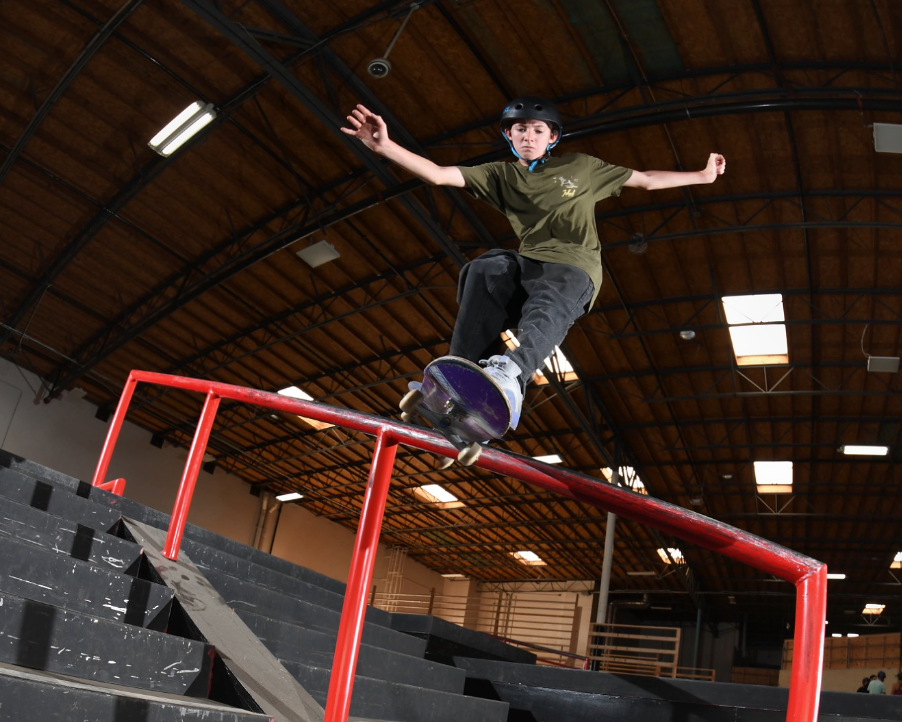
Skateboarding asks for constant, moment-to-moment attention: where your feet are, where the ramp is, when to commit. For many kids with ADHD, that kind of active focus is far easier to find than sitting still.
In a 2024 University of Münster study, children with ADHD did a weekly skateboarding workshop for four months. Afterwards they showed significant improvements in cognitive and motor tests, and in their ADHD symptoms. The researchers noted the kids found real enjoyment in movement, and recommended practising long-term to keep the benefits.
Christ et al., Frontiers in Pediatrics, 2024 →More broadly, reviews of many studies have found that regular physical activity can improve inhibitory control, working memory and flexible thinking in children and teens with ADHD.
Structure, repetition and your own pace
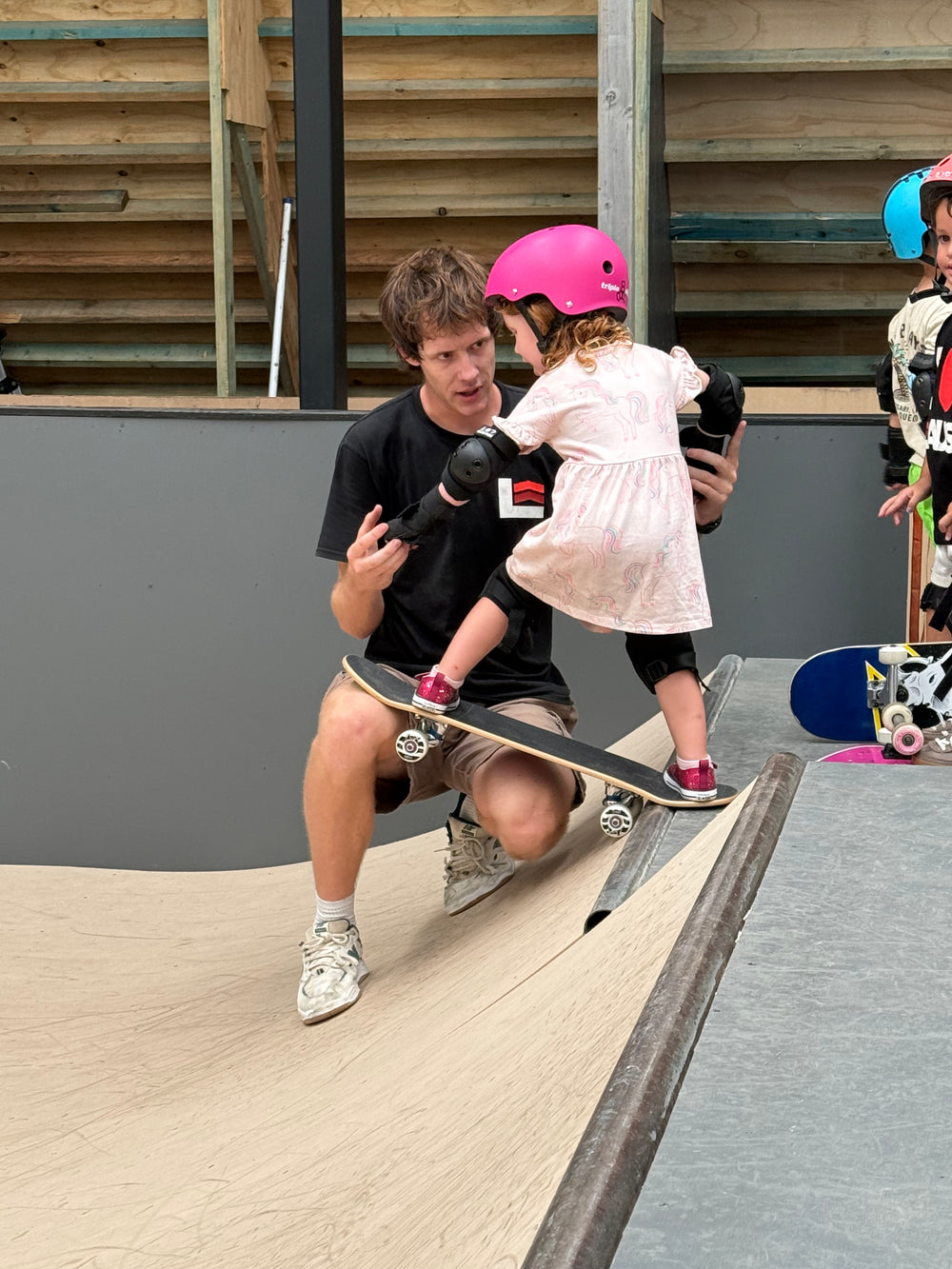
Skateboarding is predictable in the best way: the same ramps, the same steps, practised again and again until they click. Kids progress on their own terms, there’s no ball flying at them and no complicated team plays to follow.
Systematic reviews of exercise programs for autistic children and teens have found positive effects on motor skills and coordination, social skills and behaviour, with regular, long-term exercise showing the strongest benefits for social skills.
Jia et al., Frontiers in Psychiatry, 2024 →There isn’t yet a large study on skateboarding and autism specifically, but the things that make exercise helpful (clear structure, repetition, movement and gradual challenge) are built into how skateboarding is learnt.
Built for every kind of learner
The benefits come from turning up
Both the skateboarding study and the wider research point the same way: the gains come from regular practice over months, not a one-off session. That’s why our lessons run as full terms, with open sessions in between to practise.
Skateboarding is a sport, not a treatment, and it doesn’t replace medical, therapy or school support. Every child is different. If you have questions about your child’s needs, talk with their health professionals, and talk to us about how we can help them enjoy skating.
Sources
- Christ T, Boström KJ, Ohrmann P, Britz H, Wagner H, Bohn C (2024). The effects of a four-month skateboarding intervention on motor, cognitive, and symptom levels in children with ADHD. Frontiers in Pediatrics 12:1452851. doi.org/10.3389/fped.2024.1452851
- Meta-analysis of the effects of physical activity on executive function in children and adolescents with ADHD (2023). PLOS ONE. doi.org/10.1371/journal.pone.0289732
- Jia M, Zhang J, Pan J, Hu F, Zhu Z (2024). Benefits of exercise for children and adolescents with autism spectrum disorder: a systematic review and meta-analysis. Frontiers in Psychiatry 15:1462601. doi.org/10.3389/fpsyt.2024.1462601